
Practical strategies for international medical students to maximise their ophthalmology elective in the UK, including networking, skill building and research opportunities.
An ophthalmology elective is an incredible opportunity to gain hands-on experience, develop clinical skills and connect with professionals in the field. As a medical student from Jordan, I was eager to complete my elective in the UK to gain insight into the NHS. Securing a placement was challenging, so I was determined to make the most of it.
With the right preparation, international students can fully optimise their experience and make it as enriching as possible. Here are five key strategies I found helpful during my elective, along with insights to help future students plan their own.
1. Schedule your elective around conferences and educational meetings
Aligning your elective with a nearby ophthalmology conference or educational meeting – such as a symposium or workshop – provides an opportunity to network with experts, explore the latest research, and expand your professional connections. These events not only enhance your learning but also strengthen your portfolio by giving you points according to the latest ophthalmology specialty training scoring system [1]. The Eye News events section regularly lists upcoming meetings worth exploring [2].

I had the privilege of attending the Yorkshire Glaucoma Symposium thanks to a kind invitation from a resident. As it was my first academic meeting, I wasn’t sure what to expect. The setting was entirely different from the clinical environment I was accustomed to, but it proved to be an enriching experience. I met professionals from diverse backgrounds, explored new glaucoma treatments, and witnessed the collaborative spirit of the field. A particularly memorable moment was spotting an advertisement featuring Petra – one of the Seven Wonders of the World and a symbol of my home country, Jordan. Seeing it on an international stage was both inspiring and a reminder of how ophthalmology connects people across borders.
I left the symposium feeling motivated and energised, realising that attending a conference alongside an elective would be a valuable addition for anyone planning a similar experience in the UK.
2. Choose a hospital with access to the Eyesi simulator
Eyesi simulators offer an excellent opportunity to refine surgical skills in a controlled environment. Choosing a hospital with access to these tools allows you to practice, improve, and gain valuable experience, all at once.
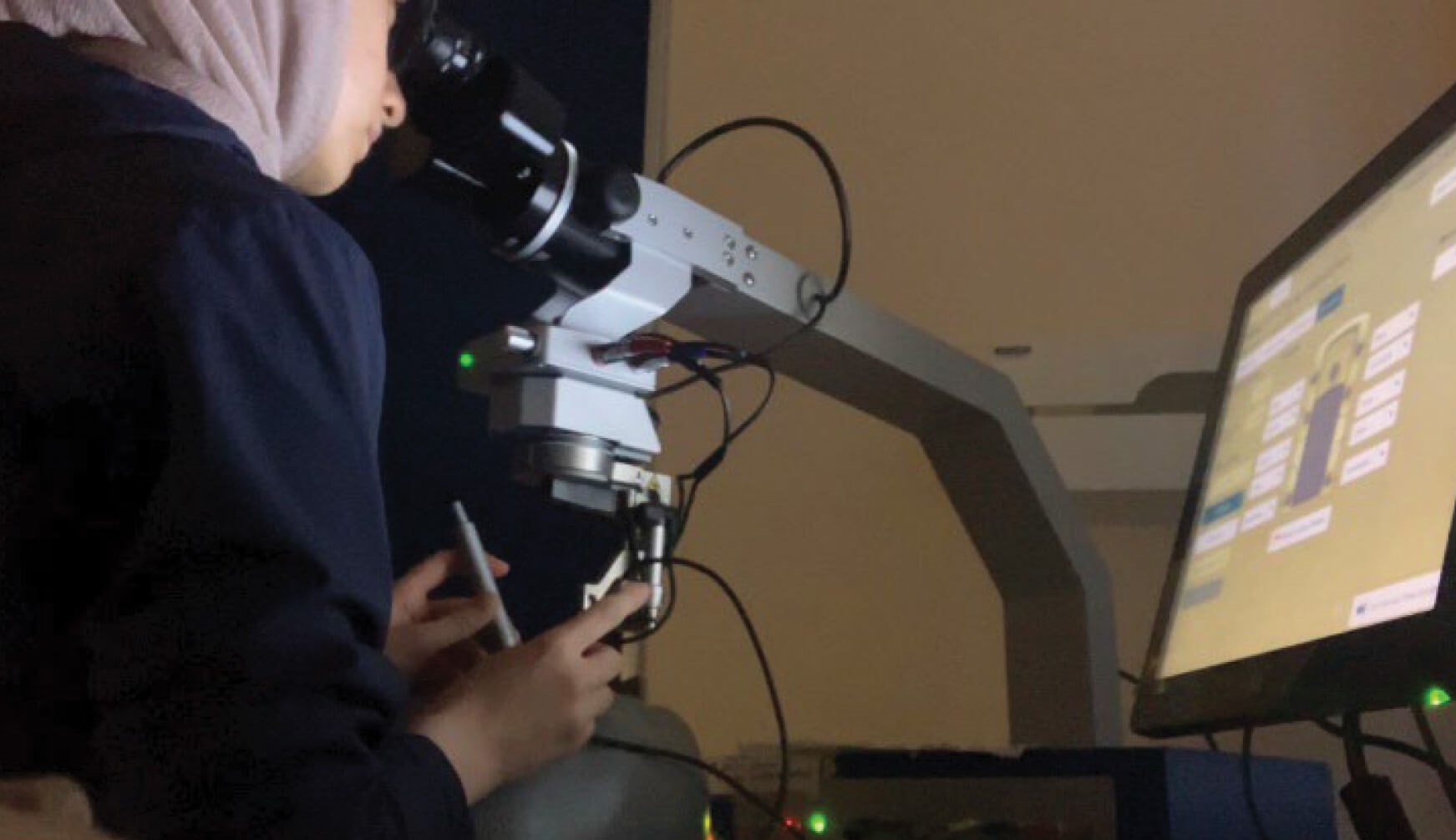
Eyesi Ophthalmic simulator.
I was fortunate that my supervising consultant introduced me to the Eyesi simulator early in my elective. Before this, I wasn’t even aware such a tool existed, and I later realised that not all hospitals provide access to it [3]. If you’re applying for an ophthalmology elective, consider prioritising hospitals with an Eyesi simulator. You can find their locations on the Royal College of Ophthalmologists’ website [4].
3. Keep a case log
During my elective, I carried a small notebook to jot down observations, key takeaways from cases, surgical techniques, and conditions requiring further research. I encountered several conditions I had never seen during my medical school ophthalmology placement, including persistent pupillary membrane, pseudoexfoliation syndrome, asteroid hyalosis, blepharophimosis, Stargardt’s disease, and harlequin-type ichthyosis – many of which I might have forgotten had I not documented them.
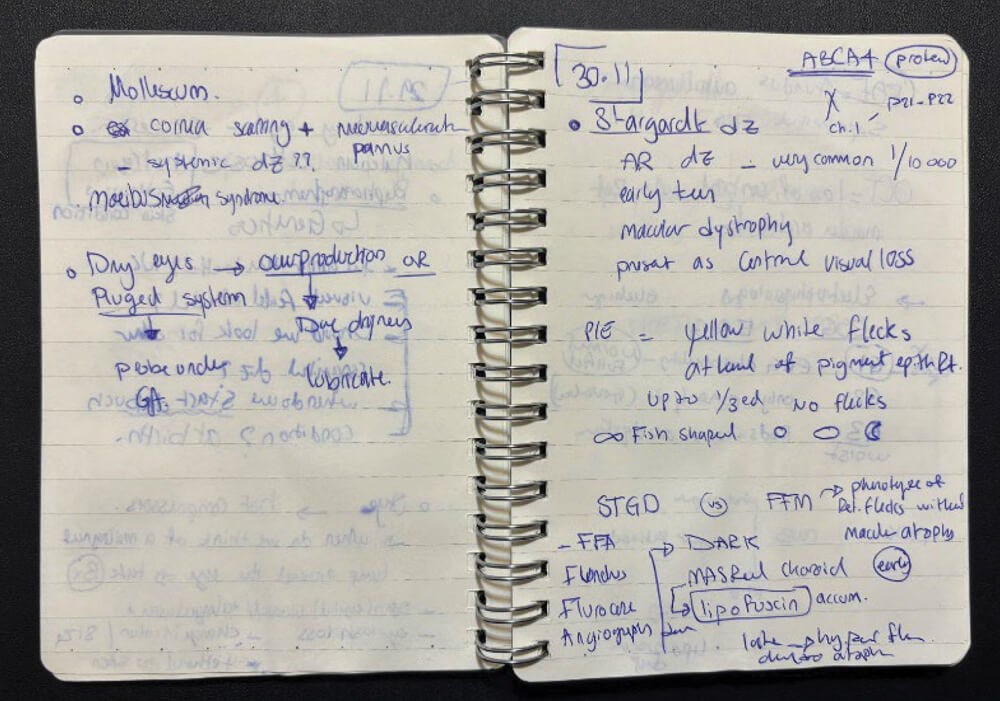
My trusty notebook throughout the placement.
In hindsight, I wish I had also logged the procedures I observed, the surgeries I attended, and the cases I encountered in a structured Excel sheet at the end of each day. This approach would have helped me retain more from my placement and served as a valuable resource for reflection.
4. Prepare in advance for a more engaging experience
A strong foundation in clinical ophthalmology skills boosts confidence and allows for more active participation during an elective. While my medical school experience provided a solid starting point, I quickly realised that practising certain skills beforehand would have helped me engage even more, particularly in the first few days.
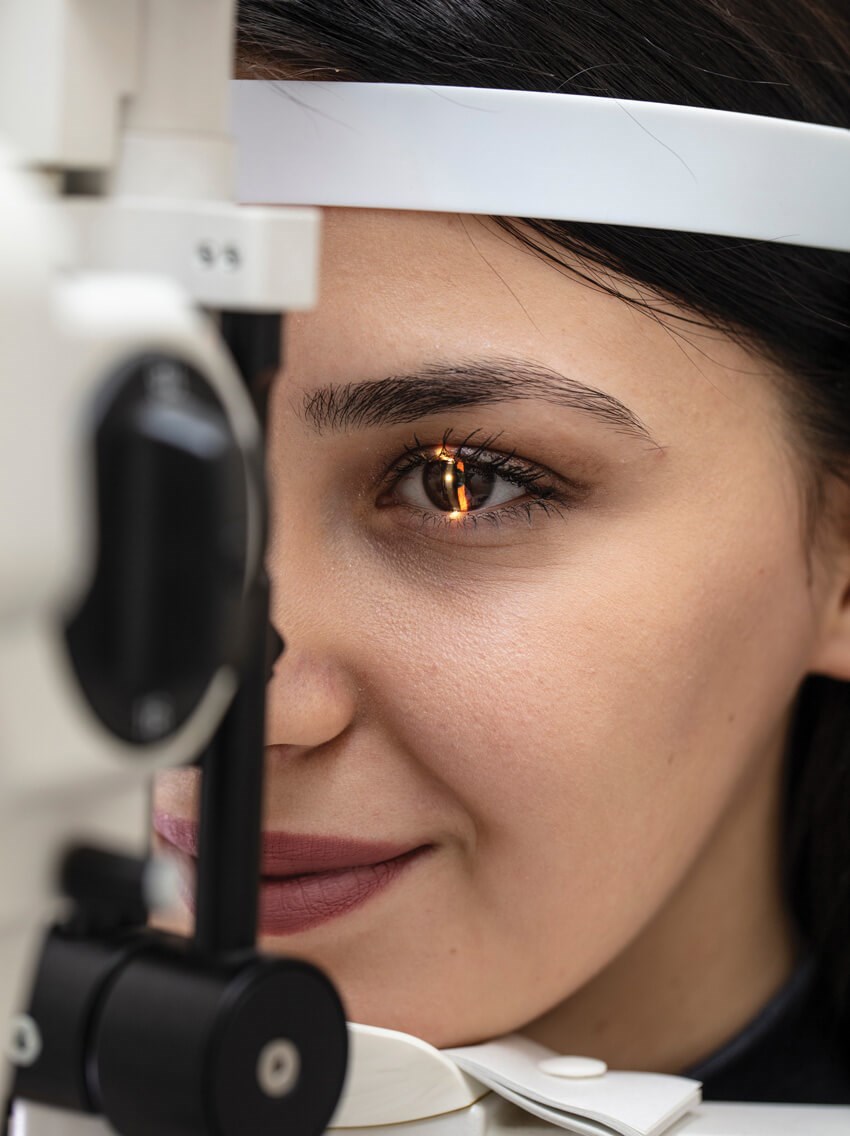
For instance, becoming familiar with slit lamp examination, the 90D lens, and understanding direct and indirect ophthalmoscopy before the elective can make a significant difference. I highly recommend the following resources:
- Tim Root’s videos and books: excellent for visualising slit lamp findings and understanding ophthalmic conditions [5].
- Eye Guru: offers structured frameworks for diagnosing and managing common ophthalmic diseases [6].
- The Wills Eye Manual: a practical guide for handling ophthalmic conditions in clinical settings [7].
You don’t need to master every skill beforehand, but having a basic familiarity will make building on them much easier than starting from scratch.
5. Seek research and audit opportunities early
I had the opportunity to join an audit project led by a consultant, but since I discovered it late in my elective, my time to contribute was limited. This experience highlighted the importance of expressing interest in research and audits from the very beginning, especially if you aim to complete the audit cycle. Many consultants have ongoing projects, and reaching out early significantly increases your chances of meaningful involvement.

Research doesn’t have to be complex – it can be as simple as writing a case study, conducting a systematic review or meta-analysis, or assisting with data collection for an existing project. Choosing a project you can continue working on after returning home is especially valuable, as it allows for deeper engagement and a greater likelihood of seeing it through to completion.
Final thoughts
To any international student considering an elective in the UK, be proactive, stay curious, and embrace every learning opportunity that comes your way. An elective is more than just an academic experience – it’s a chance to immerse yourself in a new healthcare system, refine your clinical skills, and build lasting professional relationships.
The connections you make with consultants, resident doctors, and fellow students can open doors to future opportunities, whether in research, mentorship, or career development. The hands-on experience you gain will not only enhance your confidence but also provide valuable insights into patient care within the NHS.
Approach each day with an open mind, ask questions, and take initiative. Whether it’s observing complex surgeries, participating in discussions, or assisting with research projects, every experience contributes to your growth. The skills and knowledge you acquire will stay with you long after your placement, shaping your future in ophthalmology or any other field you choose to pursue.
References
1. www.severndeanery.nhs.uk/recruitment/
vacancies/show/oph-st1-25/evidence-folder-lib
2. www.eyenews.uk.com/digital-issues-library
3. Fallon H, Gobbett A. Should points for simulated surgery be removed from the ophthalmology ST1 evidence folder? Eye News 2025;31(6):14–6.
4. www.rcophth.ac.uk/training/simulation/
eyesi-ophthalmic-surgical-simulators
5. https://timroot.com
6. https://eyeguru.org
7. www.amazon.com/Wills-Eye-Manual-Emergency-Diagnosis/dp/1496318838
[All links last accessed February 2025]
Declaration of competing interests: None declared.





