Robotic technology is redefining the landscape of ophthalmological surgery by enabling micron-level precision and control beyond human capability. Intraocular microsurgery remains challenging to perform, with concerns about accuracy, tremor, precision, depth perception and dexterity.
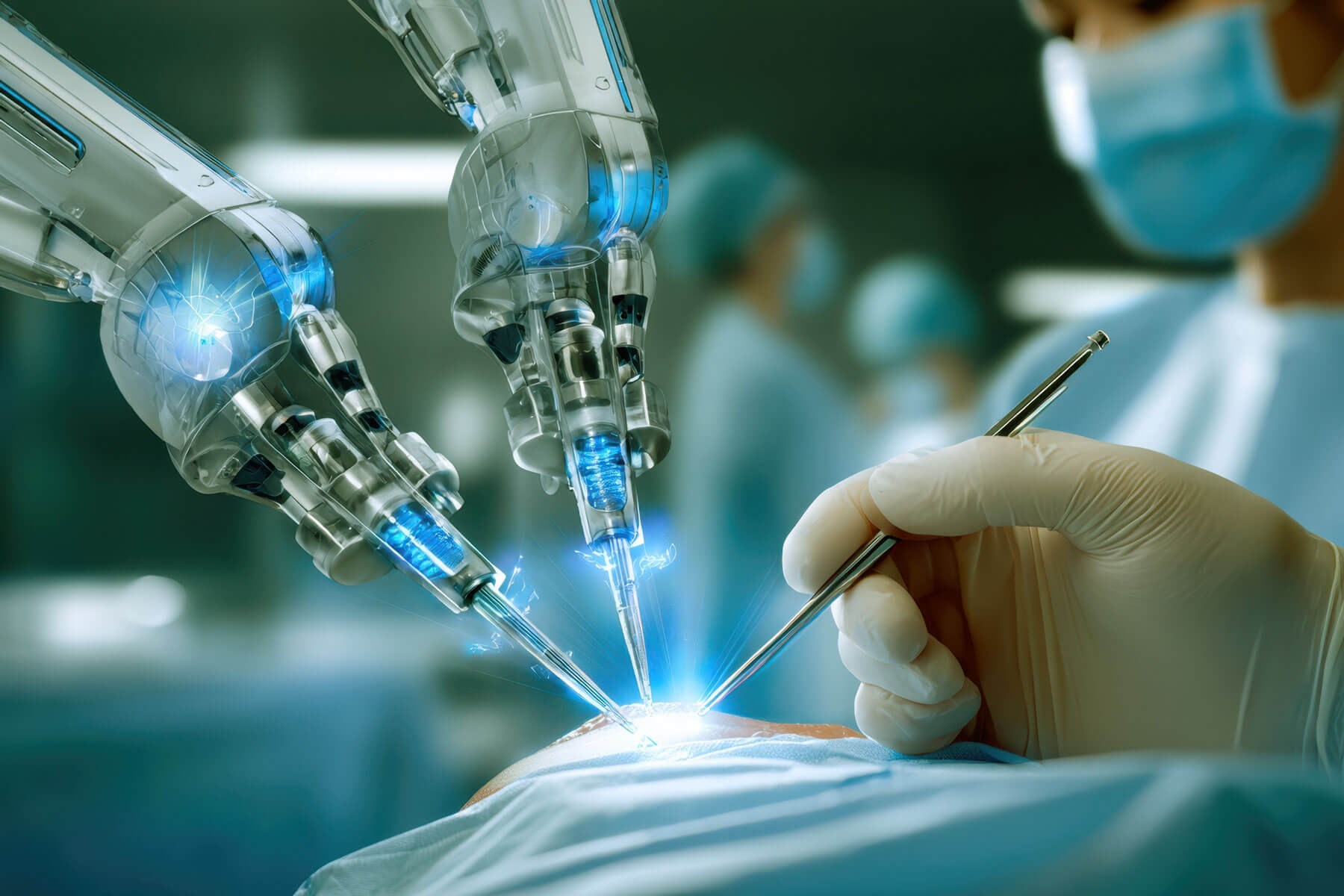
Moreover, conventional surgical tools have only four degrees of freedom, limiting tool-tip dexterity and increasing the risk of microtrauma. Emerging innovations aimed at addressing these limitations are reshaping ophthalmic surgical practice. This article explores the top five emerging robotic and automated innovations in ophthalmological surgery.
Telemanipulation robotic systems
Telemanipulation robotic systems like Zeiss Preceyes surgical system (PSS) [1] and the intraocular robotic interventional surgical system (IRISS) [2] utilise remote control, motion scaling and advanced imaging to assist in anterior and posterior segment surgeries.
The PSS is the most widely adopted commercially available robotic system for vitreoretinal surgery. Using a remotely controlled joystick, the system functions as a robotic assistant that provides surgeons with a precision better than 20µm to position and hold intraocular surgical instruments steadily for extended periods. Additionally, PSS accurately replicates a surgeon’s hand movements while eliminating physiological tremor, thereby minimising retinal microtrauma [1].
Since receiving its CE trademark in 2016, several real-world studies have demonstrated the efficacy of PSS in vitreoretinal surgeries [1]. In a first-in-human randomised controlled trial (RCT), PSS was evaluated in 12 patients requiring epiretinal or inner limiting membrane peeling. The PSS was found to be equally successful as manual surgery in terms of surgical outcomes; however, robotic procedures had a longer average duration (4m 5s vs 1m 20s) [3]. Furthermore, another study demonstrated that an intraoperative optical coherence tomography (iOCT)-based sensor can be successfully integrated with PSS to maintain a controlled distance from the retina during vitreoretinal surgeries [4]. This iOCT-based sensor is a promising step towards OCT-guided robotic retinal surgery. Importantly, PSS utilisation extends beyond vitreoretinal surgeries and have been used to precisely deliver tissue plasminogen activator as part of the management of sub-macular haemorrhage [5].
On the other hand, IRISS is designed for both anterior and posterior segment surgeries. It allows surgeons to operate from a remote console with 3D visualisation and real-time joystick input. IRISS has a unique ability to simultaneously manipulate two surgical instruments through small ocular incisions [2]. Preclinical studies have shown that IRISS can safely perform a range of intraocular surgeries, including pars plana vitrectomy, induction of posterior vitreous detachment, lens cortex removal, capsulorhexis and semiautomated OCT-guided lens removal [2,6]. This suggests that robot-assisted vitreoretinal surgery can not only redefine vitreoretinal surgery but also optimise anterior segment procedures.
Taken together, telemanipulation systems represent a significant step forward in ophthalmic surgery. By addressing limitations of manual surgery, these platforms may improve surgical outcomes and reduce complication rates. Furthermore, technologies such as iOCT and artificial intelligence (AI) could enhance real-time visualisation and support intraoperative decision-making, helping to minimise damage to critical retinal structures [7].
Co-manipulation platforms
In contrast to telemanipulation systems, co-manipulation platforms enable shared control, allowing the operating surgeon and the robotic actuator to simultaneously control the instrument. These platforms, such as the Steady-Hand Eye Robot (SHER) developed at Johns Hopkins, utilise force-sensing technology that analyses force signals from surgeons’ hands and generates a motion profile. Subsequently, the robot smoothens natural movements while eliminating physiological tremor [8]. In preclinical benchtop studies, SHER 3.0 staged design demonstrated tip accuracy of <30µm with repeatability of approximately 10µm, supporting its potential for performing subretinal injections with microns-level precision [9].
Another emerging co-manipulation robot is the Ku Leuven robotic system. It can provide 10x more precision than a human. Recently, the Ku Leuven system successfully performed the world’s first robot assisted retinal vein cannulation in humans. Using an ultrathin injection needle (approximately 0.03mm), the robot assisted in the stable injection of ocriplasmin for up to 10 minutes. The fragility and small diameter of the retinal vein (approximately 100μm) make the direct delivery of antithrombotic drugs via cannulation challenging [10]. However, by stabilising hand motion and eliminating physiological tremor, co-manipulation platforms have made this previously deemed impossible procedure achievable.
Handheld robotic devices
Another key emerging robotic tool are handheld devices, which offer minimal disruption to the workflow. These devices allow the surgeon to hold the instrument directly, while the actuator within the device cancels the tremor at the tip. One such device is the Micron, developed through collaboration between the Robotics Institute at Carnegie Mellon University and Johns Hopkins University. Micron has been shown to scale down the surgeon’s motion, improve positional accuracy, and reduce tremor by 90% [11]. A study evaluated the efficacy of micron in ex vivo porcine eyes and demonstrated an increased in retinal vein cannulation success from 29% to 63% using the Micron handheld robot [12]. Furthermore, micron features an automated position-holding mode that holds the needle steady at the puncture point for an extended period, thus further reducing microtrauma [10].
Robot-assisted cataract surgery
Cataract surgery remains the most frequently performed ophthalmology surgery worldwide, with over 26 million procedures performed annually [13]. The traditional cataract surgery, although straightforward, has its own challenges. It requires surgeons to operate on largely transparent ocular tissue while maintaining micron-level precision to prevent complications. This, combined with the small dimensions of the eye, makes cataract surgery challenging, with outcomes largely dependent on surgeons’ skills, training and the complexity of the case [14]. Robot-assisted cataract surgery appears to address some of these limitations by improving instrumental stability and precision.
The Polaris platform (Horizon Surgical system), designed at UCLA, is an AI-supported robot that combines real-time imaging with deep machine learning to improve the precision, consistency and accessibility of cataract surgery. It allows a surgeon to operate from a console that provides real-time haptic feedback while viewing detailed ocular anatomy on a 3D monitor. The surgical robotic arms are attached to the cart near the patient’s bedside and, using interchangeable microsurgical tools, can perform precise corneal incisions and phacoemulsification of the affected lens while preserving the surgeon’s control [15]. More recently, in October 2025, the first robot-assisted cataract surgeries were performed on 10 patients using the Polaris platform with no adverse effects reported to date. This breakthrough is a major step towards robot-assisted cataract surgery [16].
Autonomous capsulotomy devices
The continuous curvilinear capsulorrhexis (CCC) or capsulotomy of the anterior capsule is widely considered a crucial step in cataract surgery for achieving optimal postoperative refractive outcomes. A well-centred and sized capsulorrhexis is essential for safe lens removal and intraocular lens (IOL) implantation within the capsular bag. Although the manual CCC remains the gold standard, the variability associated with surgeons’ skills and experience has prompted the development of automated capsulotomy devices [17].
Femtosecond-laser-assisted cataract surgery (FLACS) can perform multiple steps of the cataract surgery, including anterior capsulotomy. Theoretically, this automated technology can offer more consistency, circularity and centration [18]. Large studies comparing FLACS with CCC have shown no significant difference in complication rates or overall outcomes. Despite the mixed evidence in the literature, FLACS has demonstrated encouraging results in achieving precise capsulorrhexis, including in complex cases; however, cost remains a major barrier to widespread adoption [19].
A non-laser alternative tool for automated capsulotomy is Zepto precision pulse capsulotomy (PPC). The device consists of a small console powering a disposable handpiece with a silicone suction cup containing a nitinol ring. The superelastic nature of the nitinol ring allows the suction cup to be inserted through a small corneal incision (minimum of 2.2mm) and to reopen once inside the anterior chamber. Following alignment with the anterior capsule, a rapid series of electrical pulses over approximately 4ms is delivered through the nitinol ring to create an instantaneous 360-degree mechanical capsulotomy of 5.2mm in diameter without cauterising any tissue [20]. A key advantage of this system is its compact design, allowing easy integration into the surgical workflow. Additionally, PCC enables surgeons to perform a visual-axis-anchored capsulotomy by providing intraoperative visualisation of the Purkinje reflex through a transparent suction interface. This capsulotomy acts as a ‘landing zone’ that allows 360-degree IOL overlap, particularly important for advanced optic IOLs. Early clinical evidence, although limited, has demonstrated higher rates of well-centred, precise free-floating anterior capsulotomy formation with PCC, while reducing operating time [20].
Conclusion
From robotic-assisted surgical platforms to automated capsulotomy technologies, emerging innovations are redefining ophthalmic surgery by providing unprecedented levels of control, precision and intraoperative visualisation. As these technologies continue to evolve, they hold immense potential to improve surgical outcomes and accessibility of eyecare globally.
References
1. www.preceyes.nl/preceyes-surgical-system
2. Wilson JT, Gerber MJ, Prince SW, et al. Intraocular robotic interventional surgical system (IRISS): Mechanical design, evaluation, and master-slave manipulation. Int J Med Robot 2018;14(1):e1842.
3. Edwards TL, Xue K, Meenink HCM, et al. First-in-human study of the safety and viability of intraocular robotic surgery. Nat Biomed Eng 2018;2(9):649.
4. Cereda MG, Parrulli S, Douven YGM, et al. Clinical evaluation of an instrument-integrated oct-based distance sensor for robotic vitreoretinal surgery. Ophthalmol Sci 2021;1(4):100085.
5. Cehajic-Kapetanovic J, Xue K, Edwards TL, et al. First-in-human robot-assisted subretinal drug delivery under local anesthesia. Am J Ophthalmol 2022;237:104–13.
6. Rahimy E, Wilson J, Tsao TC, et al. Robot-assisted intraocular surgery: development of the IRISS and feasibility studies in an animal model. Eye 2013;27(8):972–8.
7. Lindegger DJ, Wawrzynski J, Saleh GM. Evolution and applications of artificial intelligence to cataract surgery. Ophthalmol Sci 2022;2(3):100164.
8. Üneri A, Balicki MA, Handa J, Gehlbach P, Taylor RH, Iordachita I. New steady-hand eye robot with micro-force sensing for vitreoretinal surgery. Proc IEEE RAS EMBS Int Conf Biomed Robot Biomechatron 2010;2010(26–29):814.
9. Alamdar A, Usevitch DE, Wu J, et al. Steady-hand eye robot 3.0: optimization and benchtop evaluation for subretinal injection. IEEE Trans Med Robot Bionics 2023;6(1):135.
10. Gijbels A, Smits J, Schoevaerdts L, et al. In-human robot-assisted retinal vein cannulation, a world first. Ann Biomed Eng 2018;46(10):1676–85.
11. Gonenc B, Chae J, Gehlbach P, et al. Towards robot-assisted retinal vein cannulation: a motorized force-sensing microneedle integrated with a handheld micromanipulator †. Sensors (Basel) 2017;17(10):2195.
12. Becker BC, Voros S, Lobes LA, et al. Retinal vessel cannulation with an image-guided handheld robot. Annu Int Conf IEEE Eng Med Biol Soc 2010;2010:5420–3.
13. Chen X, Xu J, Chen X, Yao K. Cataract: advances in surgery and whether surgery remains the only treatment in future. Adv Ophthalmol Pract Res 2021;1(1):100008.
14. Alnafisee N, Zafar S, Vedula SS, Sikder S. Current methods for assessing technical skill in cataract surgery. J Cataract Refract Surg 2021;47(2):256–64.
15. https://horizonsurgicalsystems.com/polaris
16. https://horizonsurgicalsystems.com/
horizon-surgical-systems-completes-worlds
-first-robotic-assisted-cataract-surgery
17. Sela TC, Hadayer A. Continuous curvilinear capsulorhexis - a practical review. Semin Ophthalmol 2022;37(5):583–92.
18. Sun H, Fritz A, Dröge G, et al. Femtosecond-laser-assisted cataract surgery (FLACS). In: Bille JF (Ed.). High Resolution Imaging in Microscopy and Ophthalmology [Online] Springer Cham; 2019: 301–17.
19. Kecik M, Schweitzer C. Femtosecond laser-assisted cataract surgery: Update and perspectives. Front Med (Lausanne) 2023;10:1131314.
20. Chang DF. Zepto precision pulse capsulotomy: A new automated and disposable capsulotomy technology. Indian J Ophthalmol 2017;65(12):1411–4.
[All links last accessed May 2026]
Declaration of competing interests: None declared.