
The 2025 NHS 10-year plan, titled ‘Fit for the Future’, emphasises a significant shift from analogue to digital, with a strong focus on integrating AI and other technologies to transform healthcare. The plan aims to make the NHS the "most AI-enabled care system in the world" [1].
The key goals and initiatives related to AI in the plan include the expanded use of the NHS app, administrative and operational efficiency, patient safety and quality of care – developing a ‘world-first’ AI system to scan NHS systems in real-time to flag patient safety issues and predictive and preventative care, to name a few.
Tony Blair Institute for Global Change, a think-tank and consultancy on several global matters, released a report in May 2024 titled ‘Greening AI: A Policy Agenda for the Artificial Intelligence and Energy Revolutions’, which argued that AI could enable more efficient energy production, usage and generally speed up the transition to cleaner energy [2]. In other papers, the institute makes a case for AI as a powerful tool to improve clinical pathways, AI-powered digital consultations, and an enabler of digitised patient records. AI can promote sustainable practices in eyecare in the following ways:
1. Reducing unnecessary travel and clinic visits
AI-powered screening
One of the most impactful applications of AI in eyecare is automated screening for conditions like diabetic retinopathy, glaucoma and age-related macular degeneration. These images can be obtained from a community setting (e.g. a GP surgery or a mobile screening van). Tahir, et al. have shown that AI for diabetic retinopathy screening can achieve a sensitivity and specificity that is comparable to that of a human specialist [3].
Enabling teleophthalmology
AI is a key enabler of teleophthalmology, where images are captured at a local clinic and sent to a specialist for review. This model reduces the need for patients to travel long distances to see a specialist, which is particularly beneficial in rural or underserved areas.
2. Optimising resource use and clinical efficiency
Faster and more accurate diagnosis
AI can quickly and accurately analyse large volumes of imaging data, such as OCT scans, to detect subtle progression, as in the case of geographical atrophy. This can lead to earlier diagnosis and treatment, avoiding more resource-intensive and carbon-heavy treatments or surgery.
Smart triage
By accurately assessing the severity of a condition, AI can help prioritise patients who need urgent care. This optimises the use of limited clinical space, equipment and staff time, making the entire system more efficient and reducing operational waste.
3. Improving supply chain sustainability
Demand forecasting
AI can analyse historical data and patient trends to more accurately predict the demand for specific medical supplies and equipment. This can lead to better inventory management, reducing the risk of over-ordering, which can lead to waste, or under-ordering, which can cause delays in treatment.
Personalised treatments
AI-driven personalised treatment plans (e.g. via chat-bots) can ensure that patients receive the most effective interventions from the outset, reducing the need for delays in care. This can reduce the use of pharmaceutical products and single-use surgical items.
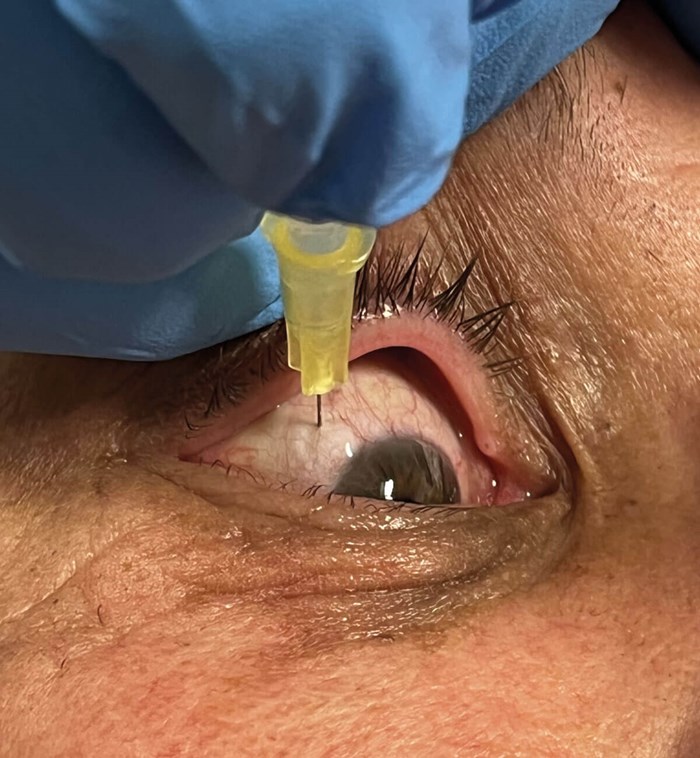
Figure 1: Oxford method of using a needle cap as a 4mm marker.
Oxford leads the way in ‘minimalising’ their intravitreal injection pack
Intravitreal injections are by far the most common surgical procedure carried out in ophthalmology, with numbers on the increase year on year. Colleagues at Oxford have shown that safe procedures are possible by eliminating the povidone skin prep or speculum [4]. They have also done away with the calliper / marker in their intravitreal packs by using the needle cap instead as a measure. This is a significant departure from standard packs with plastic speculums, gallipots and markers, reducing their overall carbon footprint significantly by reducing plastic waste of standard packs (see image).
As these packs now have the backing of sound evidence to support their safety and effectiveness, the next step would have to be universal adoption, facilitated by an endorsement by our Royal College in their updated guidelines.

Figure 2: An example of a standard intravitreal procedure pack.
References
- https://www.gov.uk/government/publications/10-year-health-plan-for-england-fit-for-the-future
- https://institute.global/insights/climate-and-energy/greening-ai-a-policy-agenda-for-the-artificial-intelligence-and-energy-revolutions
- Tahir HN, Ullah Tahir HN, Ullah N, Tahir M, et al. Artificial intelligence versus manual screening for the detection of diabetic retinopathy: a comparative systematic review and meta-analysis. I 2025;12:1519768.
- Ong AY, Buckley TMW, Birtel J, et al. Towards greener intravitreal injections: the Oxford Eye Hospital experience. Eye2025;39(13):2489–91.



