
The past few decades of surgery since the ‘mad cow disease’ have been dominated by a push to switch to disposable instruments. The reason is to prevent cross-contamination and reduce the risk of surgical site infections – especially so with prions, which cause diseases like Creutzfeldt-Jakob disease – they are extremely difficult to remove from instruments through standard sterilisation. Likewise, biofilms, which are microorganisms encased in a self-produced protective matrix, shield themselves from antimicrobial agents during sterilisation.
Single-use instruments have lower upfront costs and reduce the need for expensive cleaning and sterilisation between uses. The quality is also consistent, given that they do not suffer the same degree of wear, bluntness, or reduction in functionality (instrument fatigue) that repeated use can result in. Not surprisingly, the global single-use surgical instruments market is projected to rise from $5.7billion in 2025 to $7.8billion by 2030 [1].
The environmental cost of indiscriminate use of cheaper single-use instruments is substantial. The NHS produces over 540,000 tonnes of waste per year, with around 30% of it resulting from plastic products, including single-use medical items. A typical cataract operation in the UK can generate 182kg CO2e, much of which is due to single-use equipment.
A pragmatic solution to the single-use vs reuse for ophthalmic surgical instruments is the need of the hour. The biggest argument for single-use instruments (being the reduction in infection) does not really stack up to evidence [2]. Aravind Eye Care System (AECS) carries out nearly 300,000 cataract surgeries per year in southern India. Their operational model involves the considerable reuse of surgical devices, supplies and drugs, resulting in a carbon footprint of one phacoemulsification cataract surgery to be only 6kg CO2e. The postoperative endophthalmitis rate at the AECS is 0.04%, which is the same as the rate reported using the AAO Intelligent Research in Sight registry [3].
Segregate, sterilise and save
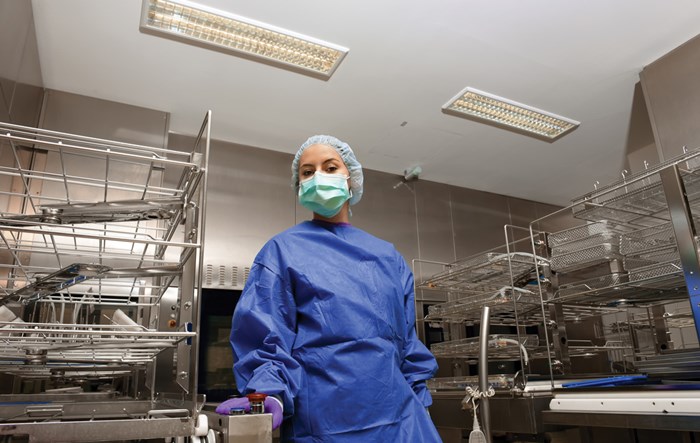
Solid instruments can be safely sterilised, while equipment with cavities, tubing or moving parts, less so. Rigorous decontamination protocols involving thorough cleaning, disinfection, sterilisation, and adherence to manufacturer's instructions for use in following specific guidance on cleaning agents, methods, temperatures, and sterilisation cycles can overcome any safety concerns. Every unit must have quality control and inspection protocols involving regular checks for damage, wear and tear, and proper function.
A robust system for traceability such that reusable instruments can be tracked through the decontamination process (cleaning, disinfection, sterilisation, and storage) is important. Also, having an adequate inventory of instruments allows for proper processing time and avoids pressure to rush the process, which can compromise safety.
The Leeds experience
The eye department at Leeds Teaching Hospitals has used the Delphi process successfully and demonstrated how this can be achieved by slimming down their cataract packs to what they term as ‘eco packs’. Their three-stage Delphi process involved inviting everyone who was involved with cataract surgery with suggestions, which were analysed and thematically broken down into groups [4]. This list was refined by a moderated face-to-face discussion in the second stage. These were subsequently ranked from the most desirable intervention to the least. The highest weighted initiatives were then implemented.
They estimate that using this method, a CO2e of 0.7kg reduction per case was achieved following the introduction of the eco packs. While the figure may seem modest in isolation, the cumulative benefit from all the procedures, considering how commonly they are carried out, is significant. Leeds has also used the Delphi process to slim down on their intravitreal injection packs, combined with waste segregation and recycling [5]. They managed to recycle 108.9g of waste per injection as a result, with an estimated annual cost saving of £5000.
A similar process must be encouraged at all the eye departments where cataract pack optimisation and segregation of reusable and disposable equipment are decided on. The Sustainability Index for Disposables in Cataract Surgery (SIDICS) is an excellent ESCRS-led initiative to help surgeons evaluate the sustainability of cataract packs, as was referred to in my previous article [6].
I thank Jonathan Malcolm and John Buchan for sharing their experience at Leeds. Carbon savings also save money. Less waste equates to less cost.
References
- https://www.marketsandmarkets.com/Market-Reports/single-use-surgical-instruments-market-167039253.html
- Shukla, AG, Chang DF, Dhanaseelan T, et al. Reusing surgical materials for cataract surgery: an assessment of potential contamination. J Cataract Refract Surg 2024;50(10):993–9.
- Raman R, Rao C, Ruamviboonsuk P, et al. Single-use versus reuse of instruments in ophthalmic surgery. Eye (Lond) 2023;37(14):2839–40.
- Malcolm J, Dodd A, Shaikh M, et al. Reducing the carbon footprint of cataract surgery: co-creating solutions with a departmental Delphi process. Eye (Lond) 2024;38(7):1349–54.
- Malcolm J, Douthwaite H, McKibbin M, et al. Designing greener intravitreal injection services using the Delphi process. Eye (Lond) 2025;39(3):609–10.
- Ashwin PT. An environmentally friendly eye service. Eye News 2025;32(2):45.



