
Sustainability has become more significant across all areas within healthcare as organisations aim to lower environmental impact whilst maintaining high standards of patient care. Ophthalmology is a technologically advanced specialty with regular equipment upgrades, and ophthalmic imaging plays a significant role in these services, including supporting the diagnosis, monitoring and managing various conditions.
The demand for imaging continues to increase alongside the patient volume. This article explores the importance of sustainability in ophthalmic imaging, examining the impact both clinically and environmentally and strategies to maintain sustainability for the future of ophthalmic services.
Ophthalmic imaging consists of numerous specialised equipment to support a wide range of protocols for various conditions. Enhanced imaging equipment provides detailed, non-invasive visualisations of the eyes, allowing for assessments to be made efficiently and accurately. The type of equipment may vary throughout different organisations; however the most commonly used devices will be the optical coherence tomography, Optomap, slit lamp and the Kowa retinal cameras. Widening the perspective, there are also a lot more cameras and systems which are used throughout different organisations and departments, such as the use of widefield imaging, as well as a standard DSLR camera to capture high-quality clinical photos for documentation and teaching.
The development of imaging has improved significantly which in the long run, enhances patient care. As technology advances, and the time it can take to photograph a patient decreases, the volume of patients will begin to increase. Therefore, the demand in photography expands. This is when sustainability within the workplace environment becomes a top priority. Organisations must consider efficient workflows, equipment lifespan, staff wellbeing – all of which must link back to the environmentally friendly practice to ensure the ophthalmic services remain effective and practical whilst always meeting the patient’s needs.
An example of this is seen within the data collected in Figure 1. This data was collected from one outpatient’s clinic within our outreach clinics that we attend within the Newcastle upon Tyne Hospitals NHS Foundation Trust. On this particular day, the clinics run as a general clinic and a corneal clinic – corneal being the more recent clinic added to the outreach service. There is evidently an increase in the patient demand over three months: the average number of patients range from 37.7 in December 2025, 54.8 in January 2026 and then 43.8 in February 2026. In January, there were some weeks that reached as high as 60. Figure 1 demonstrates the growth of patient load, as well as photography demand, both month to month and weekly.
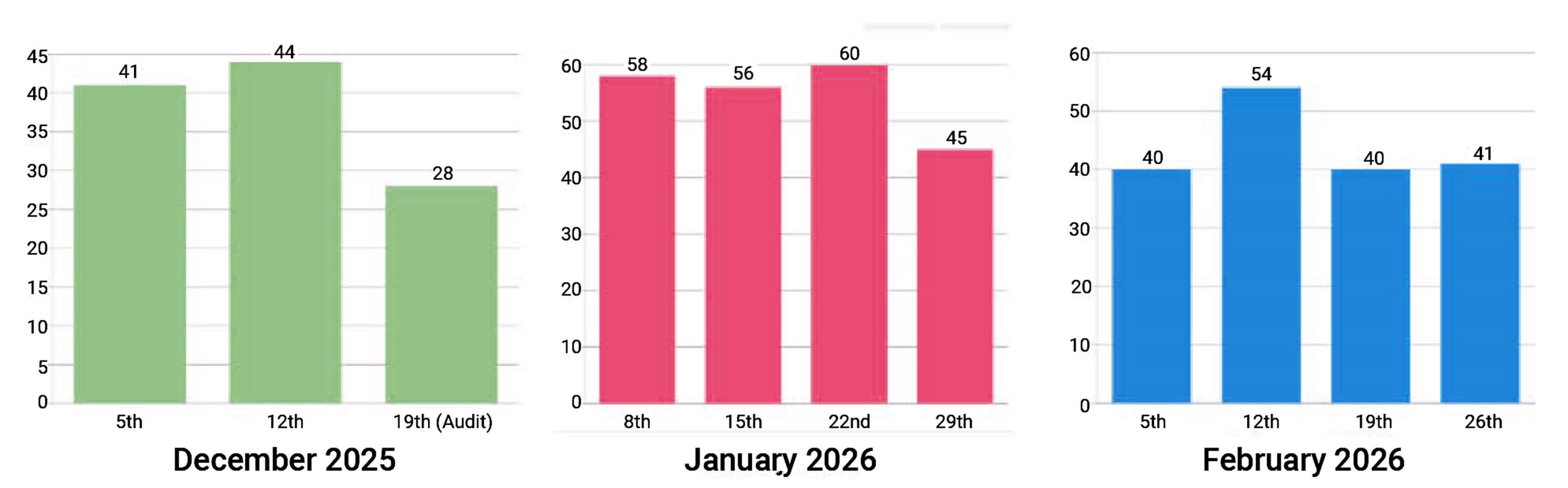
Figure 1: Demonstrating an increase in patient numbers.
The trend of increasing patient volume is seen all over healthcare as it continues to rise along with both an ageing population and the progression in programmes and machinery. This data demonstrates how the demand can increase rapidly even over three months. With this in mind, the main priority should be focusing for planning a shared workload while keeping a sustainable environment for clinic flow and maintaining resilience throughout the team.
Sustainable efficiency
Sustainability also refers to the long-term efficiency, effectiveness and functionality of the clinical workflow. Throughout all practices, a shared aim is to focus on improving patient flow, reducing unnecessary repeated imaging and prioritising communication through both staff and patients. A sustainable workflow design improves resource efficiency by having the images taken by the ophthalmic photographers and technicians rather than the clinicians. This allows the clinicians to focus on evaluation and treatment rather than image capture. Collaborating with different departments and communicating well can create a more sustainable work environment.
Repeated imaging negatively impacts a department’s sustainability as it reduces the efficiency and imaging storage, as well as lengthening the appointment for the patients. As well as this, unnecessary repeat imaging also increases running cost through the additional use of imaging equipment, data storage and any future maintenance requirements. Ensuring the images are of a high quality the first-time round is essential for maintaining an efficient service. Strong communication is also an essential aspect in ophthalmic imaging as it ensures the correct clinical information is provided and ensures the correct imaging is requested. When all departments – such as photographers, technicians, optometrists and consultants – communicate effectively, patient management decisions can be made more accurately, leading to a smoother patient pathway. By improving efficiency, it reduces bottlenecks which will result in a more effective clinic for patients and the staff involved. This also can improve staff wellbeing and the long-term feasibility of increasingly high-volume ophthalmology services.
Sustainable impact
Environmental sustainability in ophthalmic imaging focuses on lowering the environmental impact of imaging services while maintaining the high standard of patient care. Clinics and imaging departments utilise large amounts of resources through the intensive use of electronic equipment, disposable equipment and data storage systems. Sustainable practices aim to focus on reducing waste and improving the efficiency of daily use.
One way of ensuring environmental sustainability is by converting to digital imaging systems and electronic patient records rather than printing. This would decrease unnecessary overuse of paper and chemical waste related to printing processes. Clinics could also improve sustainability by having energy-efficient imaging equipment which would hopefully extend the lifespan through regular maintenance. Choosing the equipment with software upgrades and repair support can also improve the sustainability.
Sustainability will always be a critical aspect of healthcare, but it will gradually become more and more important when considering the development of ophthalmic imaging technologies. In the future, systems should be expected to focus on reduced waste and focus on energy efficiency. Bearing all of this in mind, the future of ophthalmic imaging must always continue to improve the accuracy when monitoring and diagnosing patients while also supporting more efficient, sustainable healthcare delivery.
Sustainable staffing
Equally as important is sustainability amongst staff, such as training, accessibility, opportunities and retention. This can be shown through careful workplace practices, daily encouragement and training in all aspects of the imaging department. This goes further than imaging departments – sustainability amongst staff should always be a key factor in creating a sustainable practice. Supporting staff wellbeing, combatting and reducing workplace burnout and ensuring shared responsibility can also contribute to a more sustainable and stronger working environment. In the future, upgrading to more advanced cameras and equipment could further support a more efficient and accessible eyecare service amongst all organisations.
Conclusion
To summarise, sustainability in ophthalmic imaging is becoming a necessary focus for healthcare systems, balancing developments in the camera and associated machinery in relation to the environmental and clinical responsibility. Achieving long-term sustainability in ophthalmic imaging will require continued collaboration between all areas of ophthalmology departments. By reducing waste and embracing digital innovation, using energy efficient technologies and improving equipment lifespan, ophthalmology has the opportunity to reduce its environmental impact while improving the patient care. Simultaneously, working as a team will ensure that the healthcare system is progressing whilst always sustaining all environmental factors, supporting healthcare professionals and ensuring high-quality patient care for those now and the generations to follow.
Declaration of competing interests: None declared.




