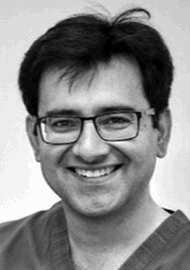
For many ophthalmic trainees and newly appointed consultants, the idea of medical entrepreneurship can feel distant and sometimes uncomfortable. We are trained in a profession centred on patient care, ethics and service. The word entrepreneur, by contrast, often brings to mind business growth, financial targets and commercial strategy. At first glance the two can appear to belong to different worlds. Yet modern healthcare no longer operates within such clear boundaries.
Clinical care does not exist in isolation from finance, governance, workforce planning, infrastructure or regulation. Every clinic list, operating session and service redesign sits within a wider system. Whether we acknowledge it or not, ophthalmologists today already work at the intersection of medicine, leadership and organisational design.


Over time I have come to appreciate that medical entrepreneurship is not about financial gain or altering the standard of care we provide. At its best it is about applying clinical insight to the systems within which healthcare is delivered. It involves understanding how services are organised, sustained and improved so that patient care remains both ethical and sustainable over the long term.
The overlap between medicine and philosophy provides an important foundation here. It reminds us that healthcare systems must remain grounded in professional values. Without that structure, scale can easily become impersonal. With it, organisational growth can become a powerful way of improving access and quality of care.
"Clinical excellence alone is not enough. It has to exist within a system capable of supporting it"
This article reflects on my own experience working within the independent sector and offers some observations that may be relevant to trainees and newly appointed consultants who encounter similar opportunities during their careers.
Learning the language of partnership
Several years ago, I had the opportunity to become involved in a clinical partnership within an independent sector ophthalmology provider. The model involved investment as a surgeon shareholder within a local service, aligning professional responsibility with the long-term performance of the organisation.
What initially appealed to me was not the financial structure but the partnership model itself. Clinicians were directly involved in discussions with operational leaders about how services should develop. Rather than being peripheral observers, clinical partners contributed to decisions that shaped the way care was delivered.
During the early development of the service, I found myself participating in discussions that extended well beyond clinical protocols. Meetings covered capital investment, regulatory compliance, workforce recruitment, financial planning and long-term sustainability. Concepts such as theatre utilisation, capacity planning and operational efficiency began to appear regularly in conversations.
None of these subjects had been part of my formal clinical training. Like many surgeons, I had spent years focusing on diagnosis, surgical technique and patient management. Yet it soon became clear that these organisational elements directly influence the quality of care patients receive. A decision about theatre efficiency affects staffing levels. Staffing influences morale and safety culture. Safety culture influences outcomes. Outcomes influence how services are commissioned and supported.
Learning this broader language of healthcare delivery did not dilute my identity as a surgeon; in many ways it strengthened it. It helped me understand how the structures surrounding clinical care can either enable or hinder what we try to achieve for our patients. For trainees who hope to shape services rather than simply work within them, developing this awareness is increasingly important.
Ethics as structure, not sentiment
One question colleagues often raise when discussing independent sector work is how ethical standards are maintained. It is a reasonable concern and deserves a clear answer.
In my experience, the answer lies in structure rather than intention. Good intentions alone are rarely sufficient. Ethical practice depends on robust governance systems that ensure transparency and accountability.
Independent sector ophthalmic providers operate under the same regulatory expectations as other healthcare organisations. Clinical governance frameworks are aligned with standards set by the Care Quality Commission, National Institute for Clinical Excellence (NICE) guidance and the Royal College of Ophthalmologists. Complication rates are audited. Patient feedback is reviewed. Outcomes are examined and discussed openly. Where problems arise, they are investigated and addressed.


The four principles of medical ethics remain constant regardless of where we practise. Respect for autonomy requires clear and honest consent processes. Beneficence and non-maleficence require careful audit of outcomes and willingness to learn from complications. Justice requires fair access to services and responsible use of resources.
What experience has reinforced for me is that ethics must be embedded within organisational design. Good systems make it easier for clinicians to practise responsibly. Poor systems increase the risk of error or compromise.
Community-based care and training
Many independent sector ophthalmic centres have been developed to deliver high-volume elective care in community settings. The intention is not to replace hospital services but to complement them by increasing capacity.
For patients, this often means easier access to treatment and more streamlined pathways. For the wider healthcare system, it can help reduce pressure on hospital eye departments that are already managing complex and urgent cases.
The Covid-19 pandemic created a particularly difficult period for surgical training across the country. Elective procedures were postponed and trainees experienced a significant reduction in operative exposure. During that period, I explored whether surgical training opportunities could be supported within the independent sector. With appropriate regulatory approval and careful planning, supervised training opportunities were introduced within our service.
"Entrepreneurial healthcare models can only remain credible if governance remains strong and transparent"
Trainees, visiting surgeons, medical students and optometry students now regularly participate in structured clinical activity. The experience reinforced an important point: training does not belong to one institution; it belongs to the profession.
If surgical volume exists and appropriate supervision can be provided, there is an opportunity to contribute meaningfully to education. However, this only works when training is treated as a deliberate organisational priority rather than an afterthought.
Reflections for the next generation
For senior trainees and newly appointed consultants my message is simple: do not see entrepreneurship as separate from your professional identity; in modern ophthalmology it is increasingly part of it.
Entrepreneurship in medicine is not about placing profit above patients. In my experience, financial sustainability tends to follow careful service design, strong governance and respect for staff and patients. When ethical foundations are strong, sustainability follows naturally. Below are a few reflections drawn from my personal experience.
First, learn the language of systems. Understand how contracts are structured, understand how theatre utilisation is measured, ask how capital investment decisions are made and engage with governance data. These conversations may initially feel distant from clinical practice, but they directly influence the conditions in which you operate.
Second, anchor ambition firmly to ethics. New technology, expanded services and increased capacity can all be positive developments. However, each decision should be tested against the principles that guide our profession. Does this improve patient welfare? Does it protect safety? Is it equitable? If the answer is unclear, pause.
Third, protect training as services grow. Any ophthalmic enterprise that benefits from NHS work carries a responsibility to contribute to the development of future surgeons. Training requires structure, patience and psychological safety.
Fourth, do not fear leadership or partnership. Many clinicians hesitate because they worry that involvement in management may compromise their independence. In my experience, meaningful partnership has strengthened professional voice. When clinicians participate in decisions about staffing, equipment and service design, patient care improves.
Finally, redefine success. Success is reflected in complication rates, in patient trust, in staff morale and in trainee confidence. Financial performance matters because it ensures continuity but it should not become the sole metric by which we judge ourselves.
UK ophthalmology is evolving rapidly, with rising demand, advancing technology and changing workforce patterns. These shifts will continue regardless of our involvement. I would encourage younger colleagues to recognise this early, develop an entrepreneurial mindset and step into leadership or partnership opportunities when they arise rather than remain on the periphery. Values-driven entrepreneurship is not a departure from our profession but an extension of it, allowing younger ophthalmologists to shape services that safeguard both patients and the profession.
TAKE HOME MESSAGES
- Medical entrepreneurship should strengthen clinical values while improving healthcare systems.
- Understanding governance, finance and service design strengthens clinical leadership.
- Strong ethics, governance and commitment to training must remain central in any care model.
- An entrepreneurial mindset enables ophthalmologists to shape the future of patient care.
Declaration of competing interests: None declared.