14 June 2026 marked 175 years since the birth of Professor Ernst Fuchs: a teacher, writer, pathologist and one of the great founders of modern ophthalmology, whose name echoes through clinics, exams and theatres worldwide to this day.
Most doctors and even ophthalmologists know the name Fuchs without knowing the man. Fuchs heterochromic uveitis. Fuchs spot. Fuchs dellen. His name is scattered across the ophthalmological world like breadcrumbs. Yet the figure behind the eponyms is often less familiar than the diseases themselves.
Ernst Fuchs was born on June 14th 1851, in Vienna, Austria, the same year Hermann von Helmholtz described the ophthalmoscope. In a way, Fuchs was born at the beginning of a new age in medicine, where the eye was beginning to be examined not only as an external organ but one whose internal components could be studied.
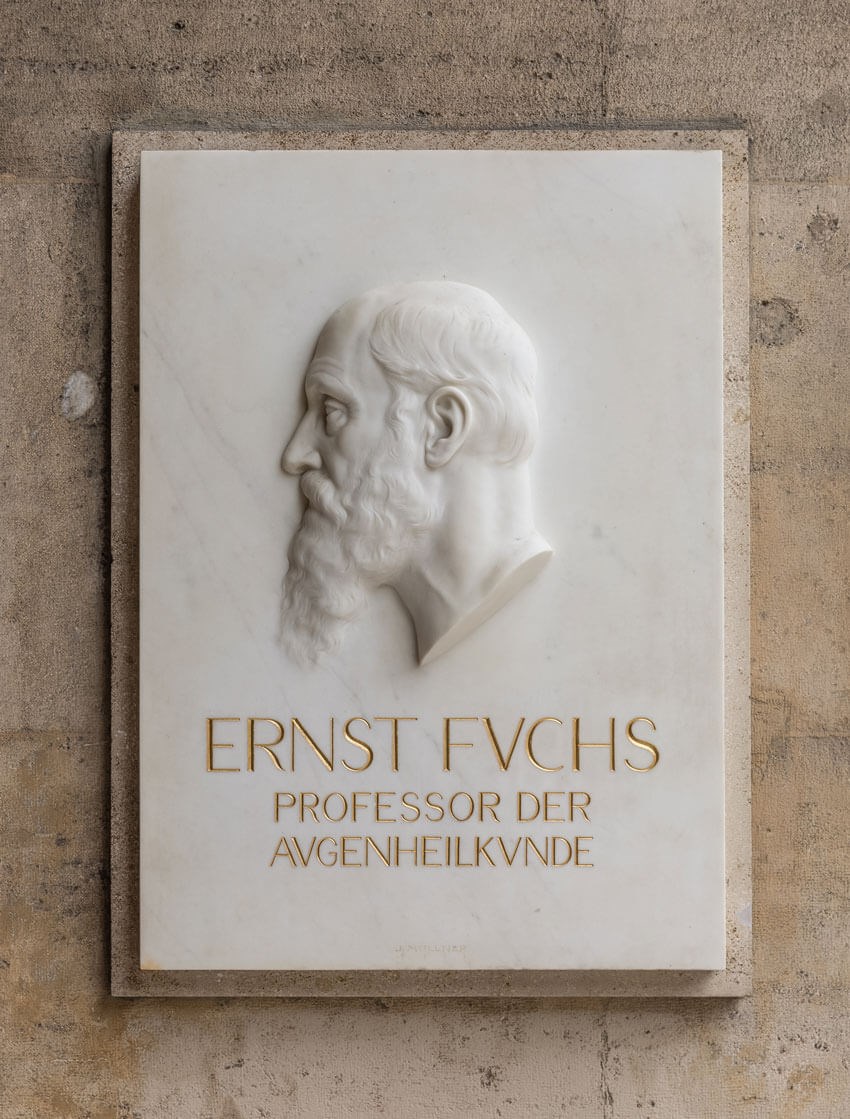
Figure 1: Ernst Fuchs, basrelief (marble) in the Arkadenhof of the University of Vienna, (Maisel# 128). Artist: Josef Müllner (1879–1969). © Hubertl / Wikimedia Commons / CC BY-SA 4.0
Fuchs attended medical school in Vienna and graduated in 1874. He trained in Vienna in a time period when it was perhaps the epicentre of European medicine with figures such as Carl von Rokitansky, described by Virchow as “the Linnaeus of pathological anatomy,” Theodor Billroth, considered the founder of modern abdominal surgery, and Carl Ferdinand von Arlt, the first physician to prove myopia is generally due to increased axial length [1]. Fuchs, in his early years, worked as an assistant in von Arlt’s ophthalmology clinics. In 1881, Fuchs moved to Liège, Belgium, where he was appointed Professor of Ophthalmology. After four years there, he returned to Vienna to be Director of the Second Vienna Eye Hospital until 1915 [2,3].
"From corneal clinical disease to retinal histopathology, it is difficult to imagine an ophthalmologist defining such a breadth of conditions today"
Remembering Fuchs only by his eponyms does not do justice to the breadth of his work. Fuchs helped tie together clinical observations with the pathological and anatomical understanding of the eye. He was interested beyond what could be seen with the naked eye and wanted to discover what pathologies looked like at the tissue level under the microscope.
Over his career, his pathological collection became vast, with more than 40,000 histological specimens described by his department [2]. Fuchs practised a medicine that was slow, meticulous and exacting, requiring repeated observations and careful specimen preparation. This was the foundation on which modern ophthalmology was built.
Fuchs was also a great teacher, with his textbook Lehrbuch der Augenheilkunde (Textbook of Ophthalmology, in English) being first published in 1889. This became one of the foundational ophthalmology texts of its time and was translated into several languages like English, French, Russian, Chinese and Japanese; whilst also having multiple editions [2,4]. Fuchs personally edited 12 of the 18 editions himself over a course of 21 years.
The eponyms
Fuchs endothelial dystrophy
Fuchs endothelial dystrophy is probably the most notable eponym that bears his name. In 1910, Fuchs used the term ‘dystrophia epithelialis corneae’ to describe a patient with epithelial bullae, reduced corneal sensation and central corneal clouding. The modern condition is known as a progressive endothelial disorder associated with oedema, guttae, visual disturbances and in advanced cases, bullous keratopathy [5]. Although the modern definition has shifted our pathological understanding from the corneal epithelium to the endothelium, the name remains.
Fuchs heterochromic iridocyclitis
Another eponym is Fuchs heterochromic iridocyclitis, often referred to as Fuchs uveitis syndrome. In 1906, Fuchs described a disease entity consisting of heterochromia, cyclitis and cataract. It is described in modern literature as a low grade, chronic, anterior uveitis that is often unilateral. It gradually lightens the affected iris causing a heterochromia and can cause a secondary glaucoma [6]. This condition has a remarkable subtlety and when diagnosing it, one requires patience and a diligent examination technique, especially without the use of modern imaging. This reflects one of Fuchs’ greatest strengths: his ability to notice the quiet but salient signs.
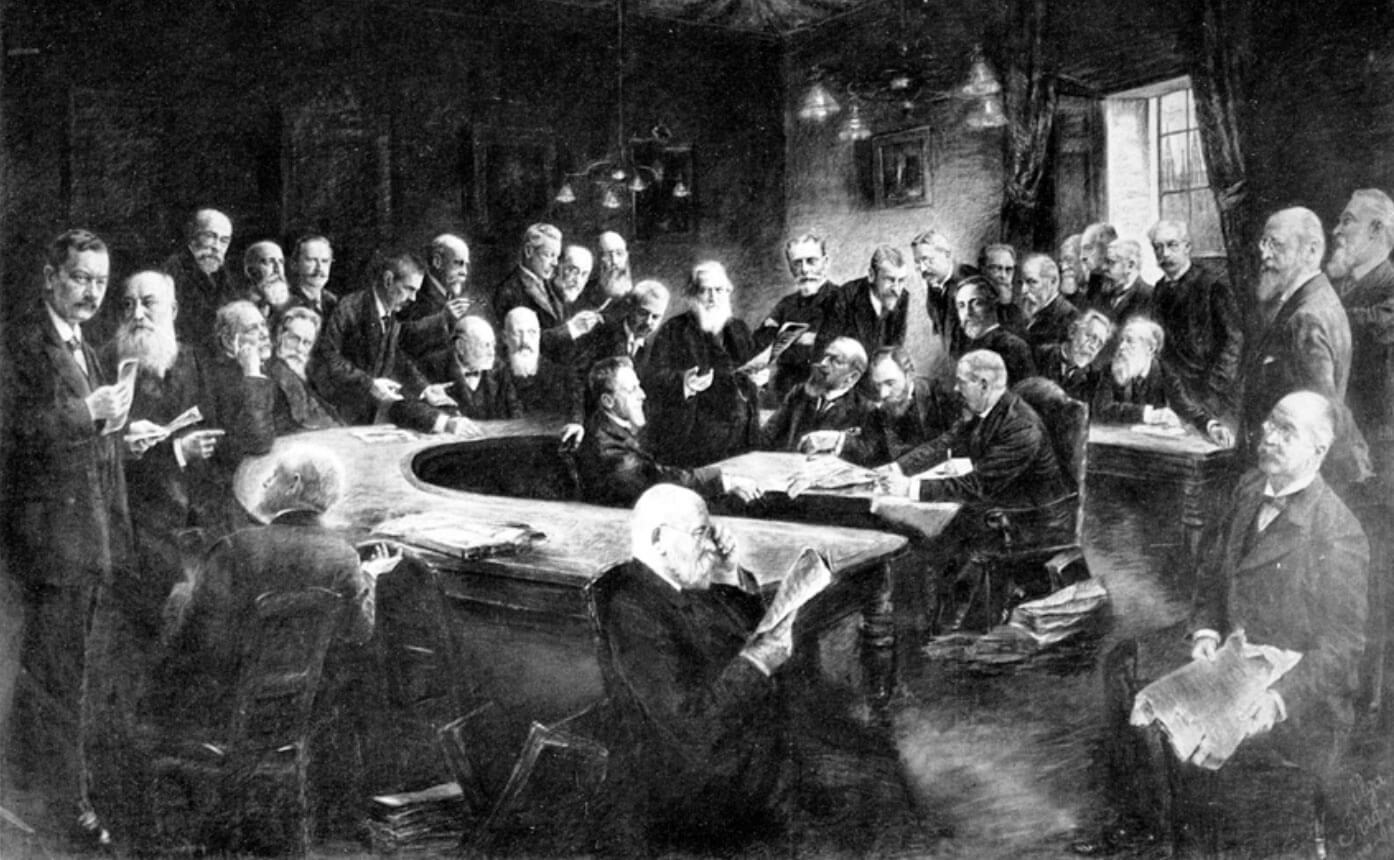
Figure 2: Featuring Ernst Fuchs In the dean’s office of the medical faculty at the University of Vienna. Chalk drawing by Olga Prager, Vienna 1908–1910. Public Domain Image.
Förster-Fuchs retinal spot
His name can also be seen in the Förster-Fuchs retinal spot, that is seen in pathological myopia. Carl Förster first described the choroidal neovascularisation in 1862 and subsequently Fuchs, in 1901, described the pigmented lesion on the macula that can be seen in high myopia [7]. It develops due to a proliferation of the retinal pigmented epithelium associated with choroidal haemorrhage.
Fuchs dellen
Yet another eponym is Fuchs dellen or Fuchs dimples which are small dimples on the edge of the cornea caused by a break in the tear film. This leads to temporary dehydration and thus thinning of the tissue. These dimples are temporary and harmless to the patient but serve as a reminder how wide the breadth of Fuchs’ research was [8].
The list does not end there as many more entities in ophthalmology have been named after the great professor. From corneal clinical disease to retinal histopathology, it is difficult to imagine an ophthalmologist defining such a breadth of conditions today. Modern ophthalmology, and society as a whole, has trended towards hyper specialisation in recent times. There now exists specialists for each domain of ophthalmology and this has transformed patient care for the better, but Fuchs reminds us to see the eye as a whole. His career was defined by his ability to connect different types of evidence, different forms of clinical reasoning and different anatomical areas of the eye together. Fuchs reminds us that even in the age of advanced technology and imaging, the need for careful clinical observation is as important as ever. It could even be argued now with such vast amounts of data and investigations, a disciplined approach to examination that looks holistically at the eye and broader still, the patient, is more important than ever.
Eponyms, what Fuchs is most known for, are viewed now with some caution. Eponyms in certain specialities are being removed for obscuring the underlying pathology, being undescriptive and also being linked to figures that posthumously have been discovered to have not been as admirable as previously thought. These criticisms are valid, but eponyms invite medical students and doctors to discover medicine’s rich history. Sir William Osler famously noted that “medicine is an art, not a trade.” Hippocrates said that “Wherever the art of medicine is loved, there is also a love of humanity.” To read around your subject and to understand the history and journey that allowed for the advances in modern medicine is part of becoming not just a competent doctor but a thoughtful and well-rounded one.
On the 175th anniversary of Professor Ernst Fuchs’ birth, we honoured him not just for his eponyms but as a figure who defined how ophthalmology was taught, practised and understood.
TAKE HOME MESSAGES
-
Ernst Fuchs (1851–1930) combined clinical observation with histopathological rigour and defined modern ophthalmology.
-
He is the eponym for many different ophthalmological conditions including: Fuchs endothelial dystrophy, Fuchs heterochromic iridocyclitis, the Förster–Fuchs retinal spot, and Fuchs dellen.
-
His textbook Lehrbuch der Augenheilkunde or Textbook of Ophthalmology, in English, was translated into multiple languages and ran to 18 editions.
-
Fuchs pioneered a holistic view of the eye, connecting subtle clinical findings with evidence across many domains like pathology and histopathology.
-
His life and career are reminders that careful clinical observation remains essential, even in the era of advanced imaging.
-
Medical eponyms, while debated, invite doctors and students alike to explore the history and art behind medicine.
References
1. Ziegler E. A text-book of special pathological anatomy. New York, USA; The Macmillan Company; 1897.
2. Müller A, McGhee CNJ. Professor Ernst Fuchs (1851-1930): A Defining Career in Ophthalmology. Arch Ophthalmol 2003;121(6):888–91.
3. Schmidt-Wyklicky G. Ernst Fuchs (1851–1930) and the Worldwide Renown of the Vienna School of Ophthalmology around 1900. Austria; Austrian Academy of Sciences Press; 2022.
4. Fuchs E. Textbook of Ophthalmology. Philadelphia, USA; JB Lippincott Company; 1889.
5. Vedana G, Villarreal G Jr, Jun AS. Fuchs endothelial corneal dystrophy: current perspectives. Clin Ophthalmol 2016;10:321–30.
6. https://eyewiki.org/Fuchs_Heterochromic_Iridocyclitis
7. Kumar A, Chawla R, Kumawat D, Pillay G. Insight into high myopia and the macula. Indian J Ophthalmol 2017;65(2):85–91.
8. https://eyewiki.org/Corneal_Dellen
[All links last accessed June 2026]
Declaration of competing interests: None declared.