
Why do an ophthalmology elective?
An elective in ophthalmology can offer a unique opportunity to delve deeper into the highly competitive specialty beyond the confines of the medical school curriculum, while experiencing a healthcare system in a new cultural setting. For those interested in applying for ophthalmology training in the UK, organising an elective can earn you a valuable point in the portfolio section [1]. Singapore is renowned for its highly efficient healthcare system, and one of the most enriching aspects of my elective was to explore the differences in the delivery of eyecare between Singapore and the UK.
My experience at National University Hospital, Singapore
My four-week elective at National University Hospital (NUH) provided me with a well-rounded exposure to ophthalmology through a structured timetable covering general and subspecialty clinics and theatre sessions. The department’s strong teaching culture stood out, and I was welcomed into daily teaching sessions for ophthalmology residents, including case discussions, journal clubs and expert-led lectures. One memorable session was a lecture delivered by an ocularist from India, who shared his expertise in crafting customised ocular prosthetics for patients following enucleation. His stories underscored the profound impact these prosthetics can have on patients’ confidence and quality of life, shedding light on an often overlooked yet deeply meaningful aspect of eyecare.
I was also impressed by the institution’s commitment to research and innovation. A notable example was the PAUL® Glaucoma Implant, a glaucoma drainage device pioneered in 2017 by ophthalmologists and clinician-scientists at NUH, now widely used in Singapore, the UK, and beyond [2]. I had the privilege of shadowing the team behind the device and learning about its latest outcomes. This experience underscored the fast-moving nature of ophthalmology, highlighting its constant innovations and appeal of the specialty.
Singapore’s healthcare model
Singapore’s healthcare system integrates patient pathways across both public and private sectors, offering patients greater flexibility in accessing care. This contrasts with the UK, where public and private healthcare pathways are typically separate from the point of access. For example, patients referred to NUH for cataract surgery can access subsidised consultations, opt for a private rate for surgery with their preferred clinician, and then return to subsidised follow-up care. This hybrid approach reflects Singapore’s emphasis on empowering individuals to take ownership of their healthcare decisions while offering greater flexibility for patients.
Singapore also boasts a unique healthcare funding structure that emphasises personal responsibility for health through a compulsory national medical savings scheme known as MediSave [3]. Funded by monthly contributions from individuals’ salaries, MediSave is complemented by MediFund, a government safety-net designed to assist citizens who cannot afford medical bills even after using MediSave and personal funds [4]. This approach ensures universal access to healthcare for its citizens. During my elective, financial counsellors were readily available in the department to help patients navigate these funding options. Observing this system in action made me reflect on how a healthcare model can be both patient-centred and financially sustainable – a balance many other countries continue to struggle with.
Singapore’s multicultural society was reflected in the diverse patient population at NUH, making bilingualism – a key pillar of Singapore’s educational policy – essential for building strong doctor-patient relationships. Many ophthalmologists I shadowed were bilingual or even trilingual, which enabled them to communicate effectively with Singapore’s diverse ethnic groups, including Chinese, Malay, and Indian patients. They were familiar with ophthalmic terminology in multiple languages, allowing them to efficiently guide patients through consultations and strengthen rapport.
Ophthalmology training in Singapore
Local medical students in Singapore benefit from two-week ophthalmology placements, which are longer than typical durations in the UK. This extended clinical exposure provides medical students with more opportunities to engage with common ophthalmic cases, explore various subspecialties within ophthalmology, and seriously consider ophthalmology as a career. Many students I met were enthusiastic, and I even had the chance to practise slit lamp examinations with them (Figure 1).
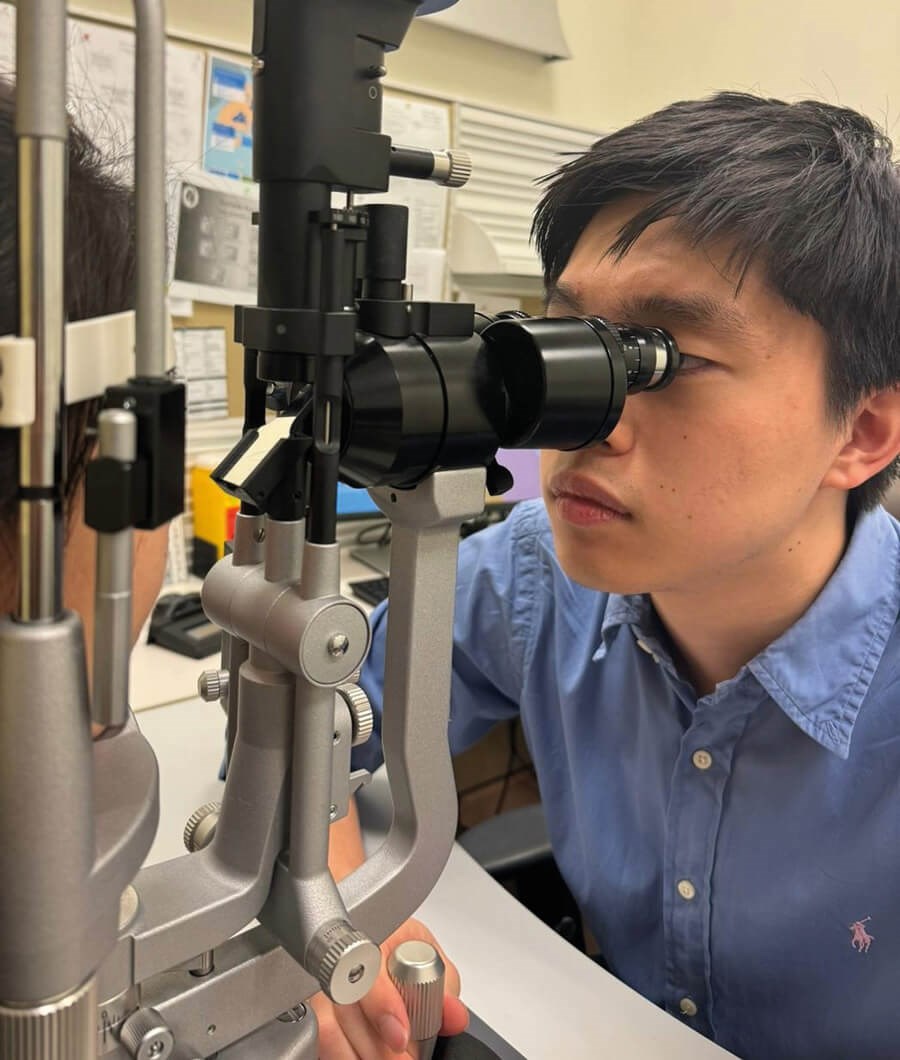
Figure 1: Performing slit lamp examination.
Ophthalmology specialty training in Singapore spans five years, compared to 5.5–7 years in the UK. In Singapore, I observed a strong emphasis on maintaining general ophthalmology skills alongside subspecialty expertise, even at the senior clinician level. Most ophthalmologists actively perform cataract surgeries and continue to manage general ophthalmology referrals even after qualifying as subspecialists and field experts. This approach not only helps minimise patient waiting times for initial referrals, but also promotes comprehensive eyecare, ensuring that other ophthalmic conditions are not overlooked and that timely referrals are made when necessary. This experience highlighted for me the importance of foundational skills and providing holistic care – something I hope to integrate into my future training as a clinician.
Beyond differences in training, my interactions with ophthalmology trainees in both Singapore and the UK highlighted the steep learning curve involved in becoming an ophthalmologist. Balancing ophthalmic knowledge, clinical skills and surgical techniques early in the training can be both challenging and rewarding.
Understanding the myopia endemic in Singapore
While many common eye conditions overlap between the UK and Singapore, myopia stood out as a major public health concern during my elective. Singapore has one of the highest rates of myopia globally, making it a key focus of preventive efforts in the country [5]. Reflecting on my own childhood, I had viewed myopia as a minor inconvenience – a condition easily corrected by glasses and common among my peers. However, after attending high myopia clinics, I came to appreciate that myopia is far more than a refractive error; it can lead to serious vision-threatening complications like retinal detachment and myopic maculopathy, particularly in adulthood [6].
What I found particularly insightful was Singapore’s proactive approach to tackling this epidemic through both pharmacological interventions and lifestyle modifications. Treatments like low-dose atropine eye drops and myopia control lenses – not yet available in the NHS – are incorporated into routine care. Additionally, the National Myopia Prevention Programme targets young children (Kindergarten 1 to Primary 4), conducting school-based vision screenings and promoting lifestyle changes such as reduced screen time and increased outdoor activity [7].
General tips for an elective
The rich experiences and insights I gained in Singapore were made possible through careful planning and taking full advantage of learning opportunities. Here are some general tips to maximise your elective:
Plan early
Consider factors like urban vs rural locations, languages spoken, travel costs, and personal interests. Speaking to seniors about their experiences can provide valuable insights. The Electives Network is a non-profit organisation that offers an extensive collection of past elective experiences, which can help you plan your own [8]. Most institutions require applications 6–12 months in advance, with spots often filled on a first-come, first-served basis. A suggested timeline for preparation is shown in Figure 2.
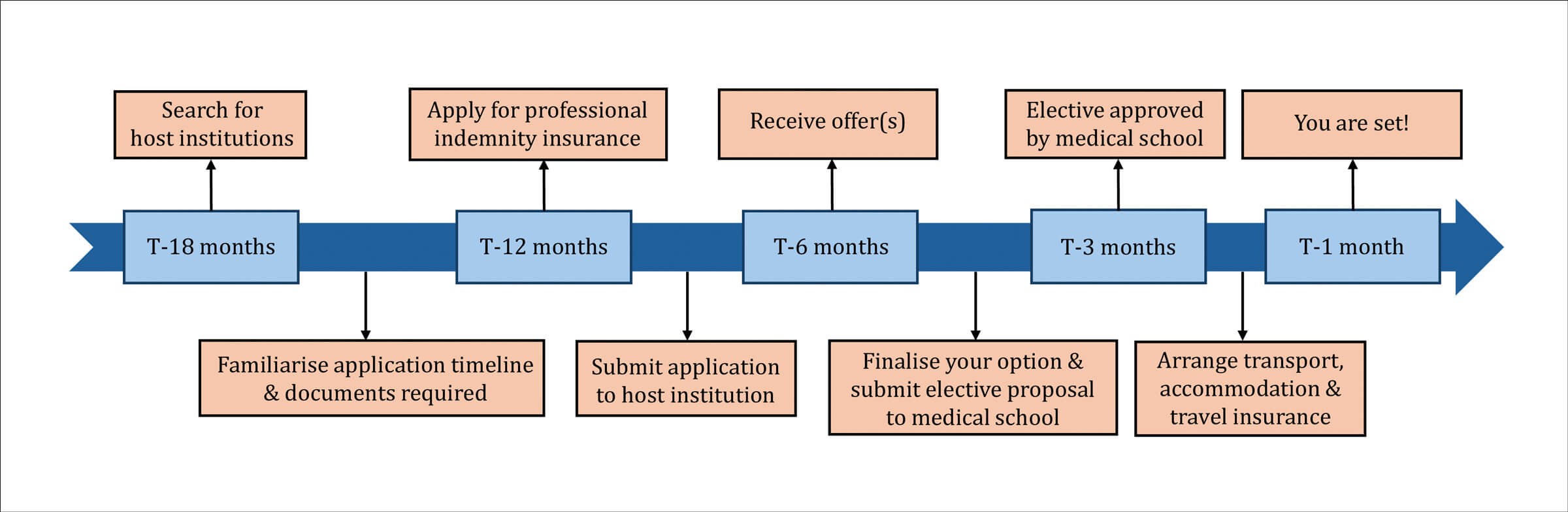
Figure 2: Suggested timeline for elective preparation.
Be proactive
Ophthalmology clinics can be busy, so take the initiative to find learning opportunities. I found that expressing interest by simply asking if I could examine patients was a good way to get more hands-on experience. Reach out to your elective supervisor or rota coordinator about interesting sessions and additional learning opportunities that could supplement your learning needs. Pre-reading can help, as some conditions and investigations may seem very niche as a medical student. Most importantly, do not be afraid to ask questions!
Embrace the local context
One of the unique aspects of an elective is the chance to experience healthcare in a new setting. Observe how eyecare differs due to local factors, which can help you gain a global perspective on ophthalmology and healthcare. Enjoy time outside the hospital Take the time to explore the local culture, food, and surroundings. Exploring the region can offer valuable insights into the community’s lifestyle and values, while giving you the chance to unwind and make the most of your trip. Embarking on an elective is one of the highlights of medical school, so be sure to cherish the experience.
References
1. https://www.severndeanery.nhs.uk/recruitment/
vacancies/show/oph-st1-25/evidence-folder-lib
2. Hui YS. S’pore develops new implant to release eye pressure in glaucoma patients; now used in 17 countries. The Straits Times 2021:
https://www.straitstimes.com/singapore/
health/spore-develops-new-implant-to-release
-eye-pressure-in-glaucoma-patients-now-used-in
3. https://www.moh.gov.sg/managing-expenses/
schemes-and-subsidies/medisave/
4. https://www.moh.gov.sg/managing-expenses/
schemes-and-subsidies/medifund/
5. Grzybowski A, Kanclerz P, Tsubota K, et al. A review on the epidemiology of myopia in school children worldwide. BMC Ophthalmol 2020;20(1):27.
6. Haarman AEG, Enthoven CA, Tideman JWL, et al. The Complications of Myopia: A Review and Meta-Analysis. Invest Ophthalmol Vis Sci 2020;61(4):49.
7. Karuppiah V, Wong L, Tay V, et al. School-based programme to address childhood myopia in Singapore. Singapore Med J 2021;62(2):63–8.
8. https://www.electives.net/
[All links last accessed April 2025]





